In today’s society many people have crooked teeth — children and adults alike. Anyone with crooked teeth should not feel ashamed, though they may want to consider straightening them. Irregularly positioned teeth are distinctive and give a grin charm and originality. If you do not like the way your teeth look, however, you can turn to a dentist who will help correct them. In certain circumstances crooked teeth lead to problems with speech, health and so on, and those affected then need to have them straightened.
Factors that cause crooked teeth
Misalignment can occur in both milk teeth and permanent teeth. Milk teeth can shift because there is not enough room for them. Genetic and inherited problems are further causes. Some of the main reasons are set out below.
The length of the dental arch
These days practically everyone eats in a modern way, with more soft and processed food. Compared with what our ancestors ate, this food needs less chewing. The changed diet means the overall size of the jaw changes, and jaws have shrunk as a result. Some dentists take the view that one of the causes of crooked or crowded teeth is that the jaw has evolved and become shorter.
Malocclusion
The upper teeth in our mouths are positioned so that they slightly overlap the lower ones, and the upper molars can fit into the grooves of the lower molars. Malocclusion occurs when this alignment cannot establish itself. Overbite and underbite are associated with common positioning problems. Poor myofunctional habits can also lead to malocclusion.
Poor myofunctional habits
Myofunctional habits are the recurring behaviours of people that affect how the muscles in the face or mouth work. They include:
- Using a bottle or a dummy
- Mouth breathing
- Thumb-sucking
- Sticking the tongue out
- Poor oral care and diet
Decay, inadequate tooth development and misalignment are effects of a poor diet. Children who do not eat enough healthy food are particularly vulnerable. Everyone should go for a dental examination once a year. People who do not go at least once a year can gradually acquire a range of oral health problems. The mouth can develop conditions leading to decay, gum disease and other problems, and many people end up with crooked teeth as a result.
Treatment for crooked teeth
Treatment options include orthodontics and surgery. A brace is one of the best ways of correcting crooked teeth and is suitable for anyone, depending on their problems. Depending on the issues involved and other factors, it can take two to three years. Surgical correction is also an excellent choice, and the results are often achieved in a shorter time. The kinds of brace and dental procedure used are set out below.
Metal braces
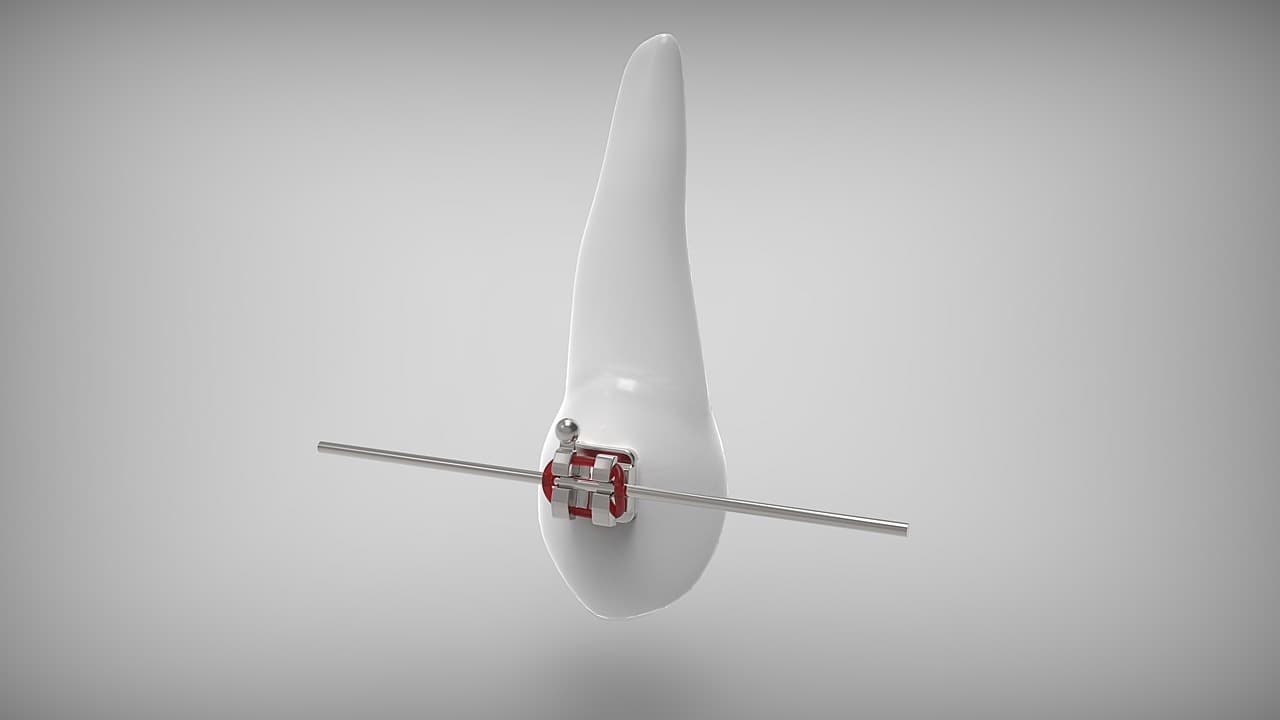
A metal brace is attached firmly to the teeth with bands, flexible wires and brackets. Metal braces are an option for people with more complicated positioning problems. Modern ones are more comfortable and have thinner brackets and metal components.
Clear aligners
Adults and adolescents are often recommended the almost invisible aligner. It is designed to fit over every tooth, much like a mouthguard, and is taken out and replaced twice a month.
Lingual braces
The lingual surface refers to the area on the sides of the teeth facing the tongue. Invisible braces known as lingual braces resemble metal braces in many respects, but are attached to the back of the teeth. They are not recommended for everyone: where teeth are severely displaced or crooked, the dentist will advise against them. The work is generally more difficult and takes longer.
Ceramic braces
This is a tooth-coloured or transparent brace. Compared with metal brackets, ceramic brackets and their wires are less conspicuous. They correct the teeth in a similar way to metal brackets, but are more prone to staining and can break more easily.
Surgical options
This is one of the best methods for treating crooked teeth, and less time is needed to achieve the desired result. To help the teeth align themselves, the orthodontist frequently suggests a small bone and gum operation. It is carried out above all in people whose teeth impair their ability to chew or speak.
The conclusion
One of the most common problems people face around the globe is crooked teeth. They can occur in adults, adolescents and children. Treatment is only necessary when they cause health or other problems, and deciding to have it is a personal choice. Visit our practice in Cologne to learn more.