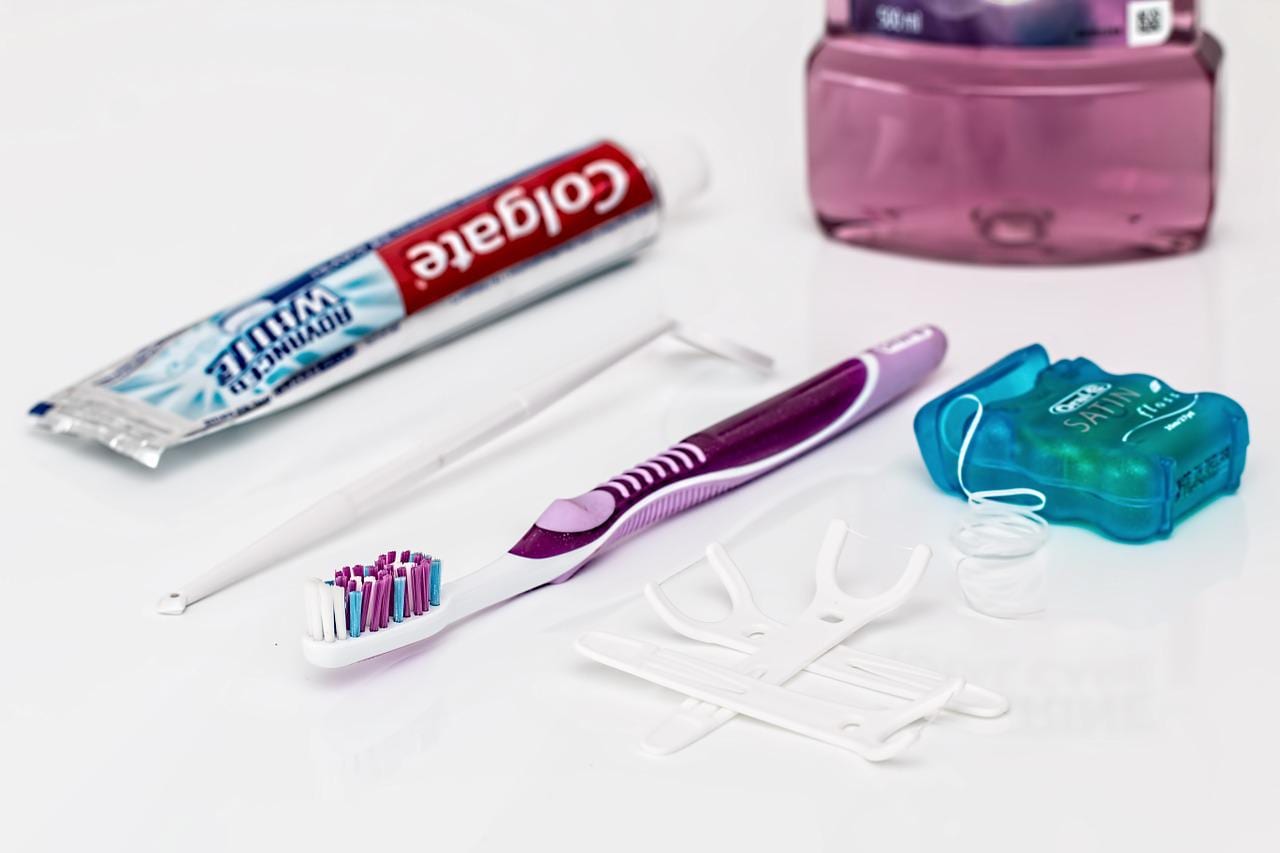
The best strategy for preventing gum disease is to clean teeth and gums by removing plaque bacteria. It can be difficult, however, to reach the spaces between the teeth with a brush alone. Plaque can be removed more effectively below the gum line and between the teeth with floss — where gums and teeth meet. Although interdental brushes can clean these hard-to-reach places efficiently, floss is an excellent alternative when the space between the teeth is too small for such a brush.
Using dental floss
The right technique matters. Here is a short guide to using floss correctly:
- Always proceed gently so as not to injure your gums.
- Cut off a 45 cm length of floss and wind the ends around the middle fingers of both hands.
- Hold a 2.5 cm length of floss taut between thumb and index finger.
- Guide the floss into the space between the teeth with a light back-and-forth motion.
- Press the floss in a C shape against the tooth once it reaches the gum line.
- Gently scrape the plaque upwards with the floss, away from the gum, by pressing the floss against one side of the tooth. Repeat these steps for the second tooth bordering that space.
- The back of the last tooth should not be overlooked.
- Work methodically so that no tooth is forgotten.
Ask your dentist or hygienist about the right flossing method if you are unsure.
Blood may be visible at first when flossing, but this bleeding should stop immediately. If your gums are still bleeding after a few days of flossing, that could indicate gum disease. Do talk to your dentist about it: they can examine your gums and tell you about the treatment options.
How often should you floss?
How often to floss, and whether to do it before or after brushing, are common questions. Use floss or interdental brushes once a day to clean your teeth before brushing.